Radon Mitigation in Spokane, WA
Have a test result, a home purchase underway, or questions about your basement? Request testing or mitigation quotes from independent Spokane-area radon providers.
Testing or mitigation for your home?
Spokane Radon Pros is a free referral service. We do not perform the work. A local provider may contact you about your request.
- Below 2 pCi/LNo action needed
- 2 to 4 pCi/LConsider fixing
- 4 pCi/L or higherEPA recommends fixing
What Radon Mitigation Actually Involves
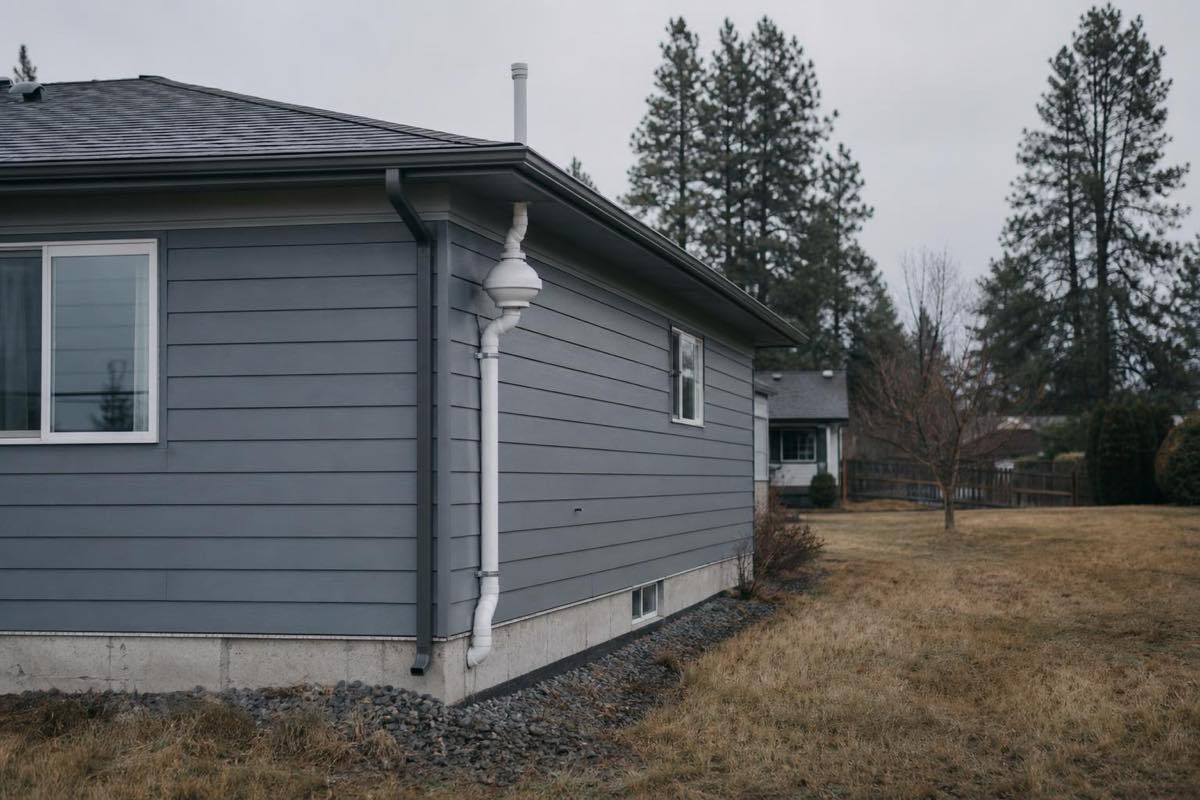
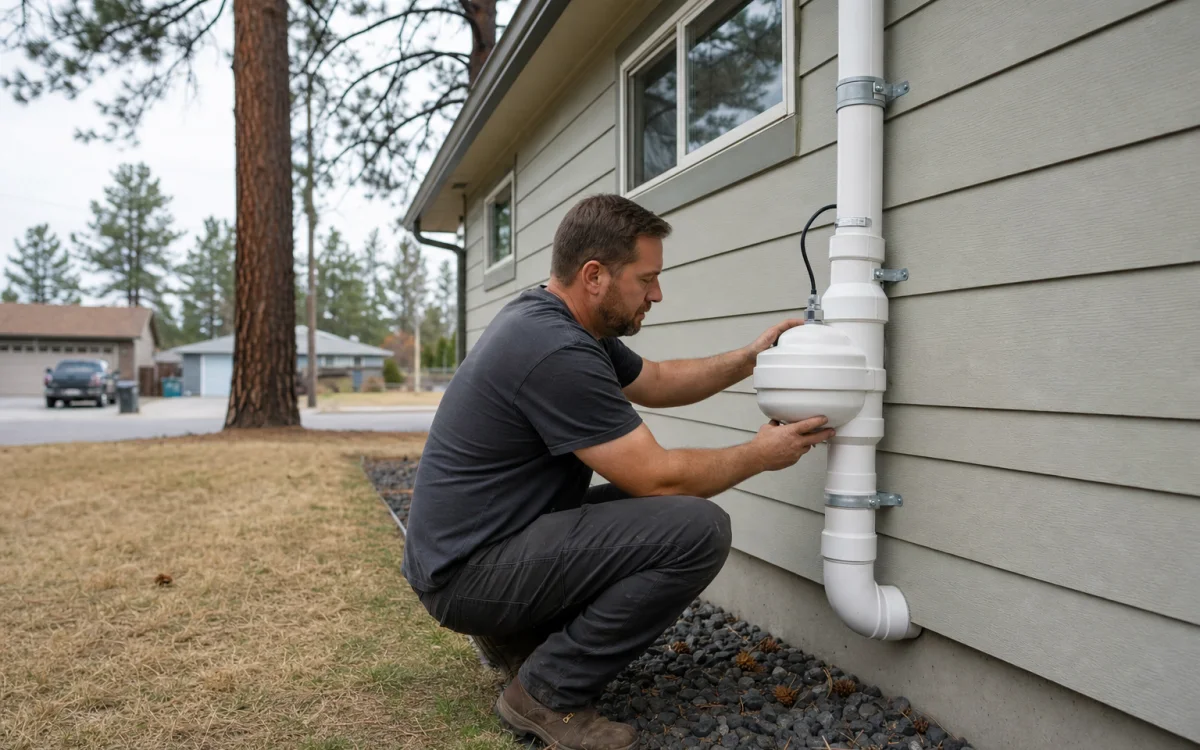
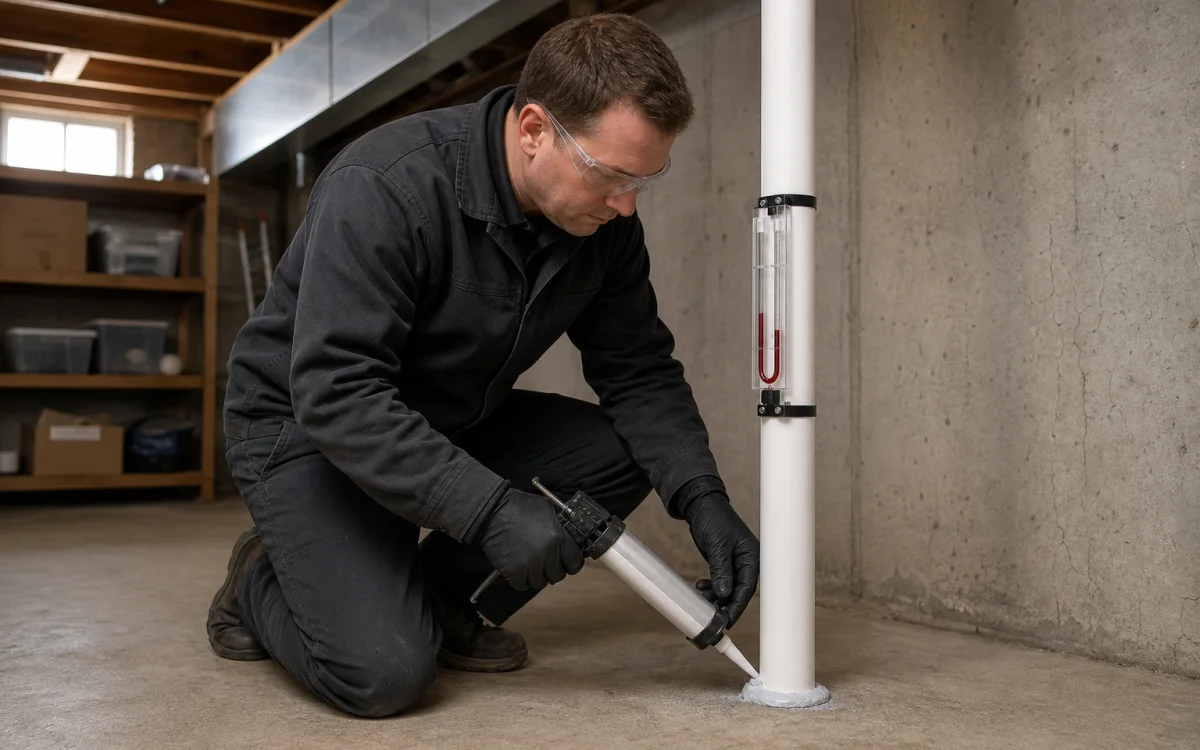
A radon mitigation system doesn't start with a fan on a truck. It starts with your test result: a qualified local professional reviews the pCi/L reading and designs a system around your specific foundation rather than installing the same setup on every job. For a basement or slab-on-grade home, that typically means sub-slab depressurization, a vent pipe drawing soil gas from beneath the concrete. Homes with a crawl space more often need sub-membrane depressurization instead, covered on our crawl space and basement page. Either way, the process includes sealing foundation openings, routing a labeled vent pipe above the roofline, and installing a sized fan. The job isn't finished at installation: a retest afterward confirms the system brought your home's radon level below the EPA's 4 pCi/L action level, not just that a fan is running.
Why Spokane Has Radon
Spokane County carries the EPA's highest radon-potential rating, Zone 1, and it isn't a guess. Uranium-bearing granite bedrock in the hills north of the city supplies the radon source, while thick, permeable glacial gravel left behind by the ice age Missoula Floods lets that soil gas move easily into homes built above it. The same gravel forms the Spokane Valley-Rathdrum Prairie Aquifer, which is why permeability, not just the bedrock, matters so much here. A 1991-1992 EPA and state survey found Spokane County homes averaged 9.9 pCi/L, more than double the action level, across 449 tested homes. That's an older dataset; the full story, including a conflicting third-party figure, is on our EPA Radon Zone 1 explainer.
What Radon Mitigation Costs in Spokane
Local pricing data puts a standard fan-based system in the Spokane area between $1,100 and $2,200, with complex jobs, crawl spaces, multiple foundation zones, or difficult access, commonly reaching $2,000 to $3,500 or more. National averages run lower, often $800 to $1,300, reflecting simpler homes elsewhere. Those are real ranges with real sources, not a single number this brand invents and guarantees, since Spokane Radon Pros routes requests to independent local professionals rather than performing the installation itself. See the full cost guide for the complete breakdown.
Do I Need a Certified Professional in Washington?
Washington has no state license or certification specifically for radon work, so technically anyone can offer the service. The state's Department of Health doesn't certify radon professionals itself, but it recommends hiring someone certified through the National Radon Proficiency Program or the National Radon Safety Board, both voluntary national credentials, not a state requirement. Professionals connected through this site typically operate under Washington's general contractor registration instead. That's a disclosure about how this trade works in Washington, not a claim that Spokane Radon Pros itself holds either credential. Ask directly about a pro's NRPP or NRSB status before work begins.
DIY Test Kit or Professional Testing
A short-term DIY test kit, often $15 to $60 and sometimes free through Washington's Department of Health, is a legitimate first step, not a lesser one. It measures the same thing a professional test does. Professional testing adds calibrated continuous monitors and a signed report, useful if a transaction or lender requires documentation, or if you want a second reading before committing to mitigation. See our full testing guide for how long each type takes and where to place one.
Buying or Selling a Home With Radon
Washington law requires sellers to disclose known radon information on the Form 17 disclosure statement, but it does not require radon testing as part of a sale. In practice, many buyers order their own test during the inspection period anyway, and mitigation costs or credits get negotiated from there. If you're working against a closing date, timing testing early in your inspection window matters more than most buyers realize. Our real estate transaction guide covers Form 17's exact language, who typically pays, and how to fit testing into an escrow timeline.
Radon Mitigation Across Spokane County
Requests get routed across Spokane, Spokane Valley, Colbert and Green Bluff, and Deer Park, including rural properties on private wells covered on our well water page. Coverage also extends into the North Idaho corridor near Coeur d'Alene and Post Falls, where Kootenai County shares Spokane's Zone 1 designation but not its construction rules. See the full service area breakdown for details, or submit a request and a local pro will confirm.
Ready to test or schedule mitigation?
Request free quotes and a local provider may contact you about pricing.
Radon Mitigation Questions, Answered Straight
How much does radon mitigation cost in Spokane?
Most standard radon mitigation systems in the Spokane area run $1,100 to $2,200, based on local pricing data, with complex jobs involving crawl spaces or multiple foundation zones reaching $2,000 to $3,500 or more. National averages run lower, often $800 to $1,300. See the full cost guide for a breakdown by system and home type.
Is radon really a problem in Spokane, WA?
Yes. The EPA designates Spokane County as Radon Zone 1, its highest radon potential category, because of uranium-bearing granite bedrock north of the city and the highly permeable glacial gravel that underlies the Spokane Valley. A 1991-1992 state survey found Spokane County homes averaged 9.9 pCi/L, well above the EPA's 4 pCi/L action level.
Do I need a certified radon professional in Washington?
Washington has no radon-specific license; professionals we connect you with typically operate under the state's general contractor registration instead. The Department of Health recommends hiring someone certified through the National Radon Proficiency Program or National Radon Safety Board, both voluntary national credentials, and directs homeowners to those organizations' provider directories.
Can I test for radon myself instead of hiring someone?
Yes. A short-term DIY test kit, often $15 to $60 and sometimes free through Washington's Department of Health, is a reasonable first step and measures the same thing a professional test does. If your result comes back near or above 4 pCi/L, a follow-up professional test or mitigation quote is the honest next step.
How long does it take to install a radon mitigation system?
Installation time varies by home: a straightforward basement or slab system is typically completed within a single working day, while homes with crawl spaces, multiple foundation types, or difficult access commonly take longer. After installation, a retest confirms whether the system brought your home's radon level below the EPA's 4 pCi/L action level before the job is considered complete.
Does Spokane require radon-resistant construction in new homes?
Yes. Washington's building code (WAC 51-51, Appendix F) makes radon-resistant construction mandatory for new homes in Spokane County and six other Zone 1 counties, including a sealed vent pipe and sub-slab gas barrier. Kootenai County, Idaho, right across the state line, shares the same radon zone but has no equivalent statewide requirement.
See the full pricing breakdown
Real cost ranges for testing and mitigation, sourced, before you request service.