Radon Testing in Spokane, WA
Radon has no smell, color, or taste, so testing is the only way to know your home's actual level. Compare a DIY test kit to professional testing below, or request a professional test directly.
DIY Test Kit or Professional Testing
Both are legitimate ways to test, and neither is the right answer for everyone. A short-term DIY kit, a small charcoal or electret canister you place yourself, typically costs $15 to $60 and is sometimes free through Washington's Department of Health. It measures the same radon gas a professional test does, and both EPA and WA DOH treat it as a genuine first step, not a lesser substitute. Professional testing uses calibrated continuous monitors, follows placement protocols a real estate transaction or lender may specifically require, and comes with a signed report a DIY kit doesn't produce. If you're testing for your own peace of mind, a DIY kit is a reasonable place to start; if a transaction or documentation requirement is involved, professional testing is usually the more practical choice.
How Long Does Radon Testing Take
Short-term tests, the most common type, run 48 hours to 4 days with windows and doors closed, following WA DOH's own closed-house guidance so outside air doesn't dilute the reading. They're the standard choice for a real estate transaction or a first look at your home's level. Long-term tests run about three months and give a more representative year-round average, since radon levels shift with weather, wind, and heating season; a home that tests moderate in summer can read higher once the furnace runs and the house seals up for winter. Most homeowners start with a short-term test and move to a long-term one only if they want a fuller picture before deciding on mitigation.
Where to Test in Your Home
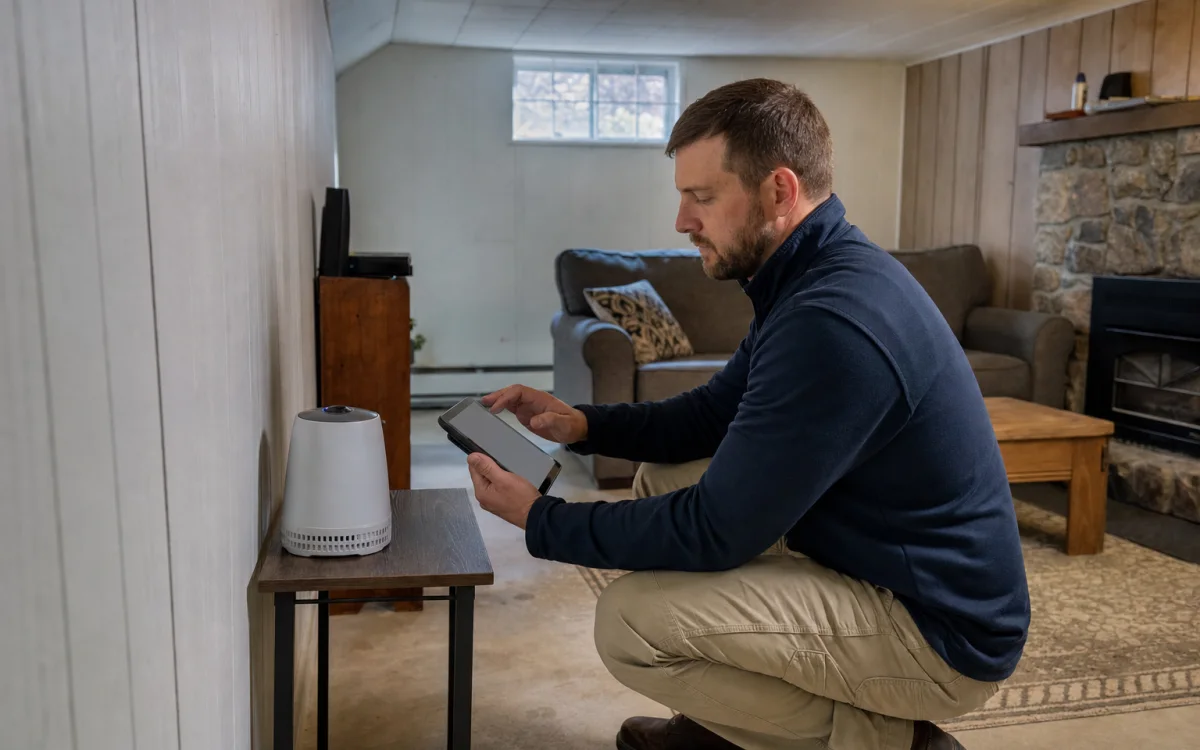
WA DOH's own placement guidance is specific: test in the lowest lived-in level of your home, a basement family room or main-floor room over a crawl space, not a utility closet, hallway, or room no one spends real time in. The idea is straightforward. A radon reading is only useful if it reflects a space you actually occupy; testing an unused corner might produce an accurate number that tells you almost nothing about your real exposure. Keep the device away from drafts, exterior doors, windows, and heating vents, and avoid moving it once it's placed. If you're testing ahead of a home sale, ask whether the buyer, agent, or lab has a specific placement requirement first.
What a High Result Means
A result at or above 4 pCi/L, the EPA's action level, means mitigation is recommended; a result between 2 and 4 pCi/L falls into EPA's "consider fixing" range. Either way, a single test is a starting point, not a verdict. A second short-term test, a long-term test, or a professional follow-up confirms the reading before you commit to a system, since radon levels can vary meaningfully day to day. If your result is elevated and you're ready to move forward, our radon mitigation page covers what a system involves and what it costs.
What Professional Testing Costs in Spokane
A standard short-term professional test in the Spokane area typically runs $150 to $300, with local pricing data averaging around $157 for a standard home; larger homes or long-term monitoring can push that higher. National averages run higher still, closer to $420, partly reflecting markets with fewer certified testers. DIY kits remain the cheapest starting point at $15 to $60. See the full cost guide for testing and mitigation pricing side by side, including why the ranges vary as much as they do.
Colbert, Green Bluff, and Deer Park Have Their Own Pages
This page is the county testing process: kits versus professional monitors, timing, and placement. Suburb queries belong on the town pages. Radon testing in Colbert, WA covers Green Bluff granite and new-home RRNC checks. Radon testing in Deer Park, WA covers rural north-county properties and private wells. Use those URLs when the house is in one of those communities.
See Our Real Estate Testing Guide
If a home sale, purchase, or refinance is part of why you're testing, Washington's Form 17 disclosure rules and typical who-pays practices are different enough from a routine test that we've written a dedicated guide. It covers what Form 17 actually asks about radon, how buyers and sellers usually handle the cost, and how to time testing around a closing date without delaying it. See the real estate radon testing guide for the full breakdown.
Ready to schedule a test?
Request free quotes and a local provider may contact you about your request.
Radon Testing Questions, Answered Straight
What's the difference between a DIY radon test kit and professional testing?
A DIY kit is a simple charcoal or electret canister you place yourself and mail to a lab, typically $15 to $60. Professional testing uses calibrated continuous monitors, follows placement protocols a real estate transaction or lender may require, and comes with a signed report, typically $150 to $300 in the Spokane area.
How long does a radon test take?
Short-term tests, the most common type, run 48 hours to 4 days with windows and doors closed. Long-term tests run about three months and give a more representative year-round average, since radon levels shift with weather and heating season. Most homeowners start with a short-term test unless a longer average is specifically needed.
Where in my home should radon be tested?
Test in the lowest lived-in level of your home, such as a basement family room or main-floor room over a crawl space, not a utility closet or hallway no one spends time in. Testing a room nobody uses tells you little about your actual exposure, even if the reading itself is accurate.
What does a high radon test result mean?
A result at or above 4 pCi/L, the EPA's action level, means mitigation is recommended. Results between 2 and 4 pCi/L fall into a "consider fixing" range under EPA guidance. Either way, a single test is a starting point: a second test or a professional follow-up confirms the reading before you commit to a system.
Does Spokane Radon Pros perform radon testing itself?
Spokane Radon Pros is a referral service that connects Spokane-area property owners with independent, qualified local radon professionals for testing and mitigation. We do not perform testing directly. When you request service, we route your information to a local provider who can schedule and carry out the actual test.
See what radon mitigation involves
What a system involves, what it costs, and how to get started.